

No flat terrace? You can still go solar.
Sloped roofs, metal sheet roofs, elevated structures, car ports, and ground mounts—what really decides whether a location is suitable.
Read the article →Plenty of Chennai homes have a terrace that is already doing several jobs. There is a water tank in one corner, the staircase headroom in another, clothes lines across the middle, and a row of pots along the parapet. Owners look at what is left and conclude there is no room for solar. In most cases there is — just not as much as a larger roof would take, and that turns out to be fine.
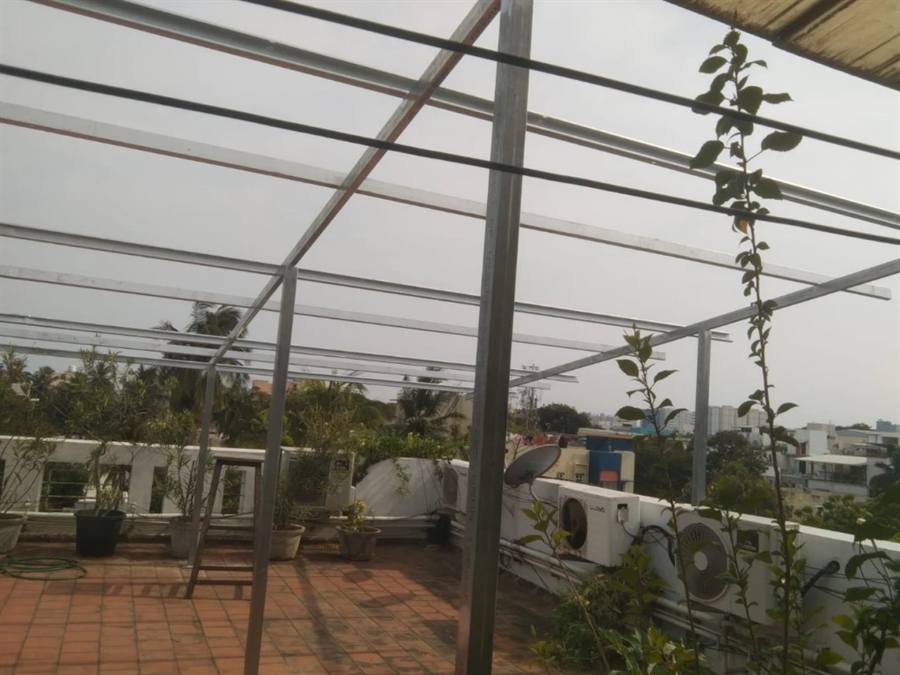
As a working figure, allow roughly 80 to 100 square feet of clear, unshaded area per kilowatt. Higher-efficiency panels sit at the lower end of that range, which is exactly when paying for them makes sense. In round terms:
These are planning numbers. The real figure depends on panel wattage, how the rows are laid out, and the walkway you need to leave for cleaning and maintenance.
This is the single most useful option for a crowded terrace. Instead of occupying the floor, the array sits on a raised galvanised structure well above head height. The terrace underneath stays usable — clothes still dry there, plants still live there, and the space picks up welcome shade during summer. In effect the same square footage does two jobs.
It also lets the array span over obstructions that would otherwise break up the layout, and lifts the panels clear of shade cast by the parapet wall in the early morning and late afternoon.
Leave room to work. Panels need periodic cleaning and inspection. A layout that squeezes in one extra panel at the cost of any safe access will cost you more in awkward maintenance than the panel ever generates.
The instinct is to feel that if you cannot wipe out the whole bill, it is not worth starting. In practice a 2 kW array on a compact roof still produces in the region of 240 to 270 units a month, and those are units you stop buying every single month for the next two decades. Solar does not have to be all or nothing to be worth doing.
What matters is sizing sensibly to what your roof and your consumption support, which is the same principle we cover in our guide to working out the right capacity. And if your usable space is on a sloped or sheet roof rather than a terrace, our article on installing without a flat terrace covers the options.
Send us a photo of your roof on WhatsApp and we will give you an honest view of what will fit.
Keep reading
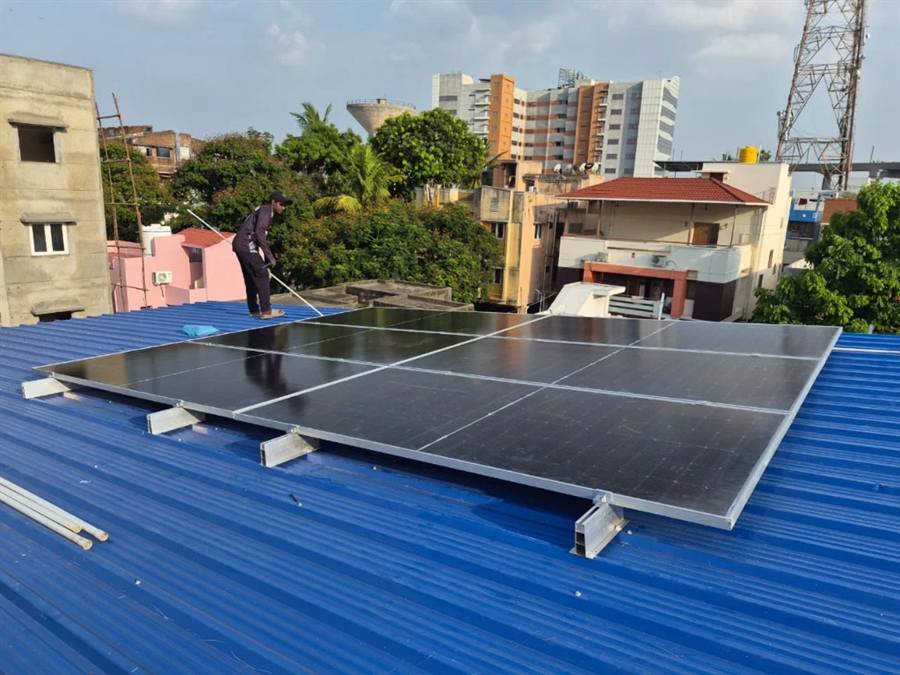
Sloped roofs, metal sheet roofs, elevated structures, car ports, and ground mounts—what really decides whether a location is suitable.
Read the article →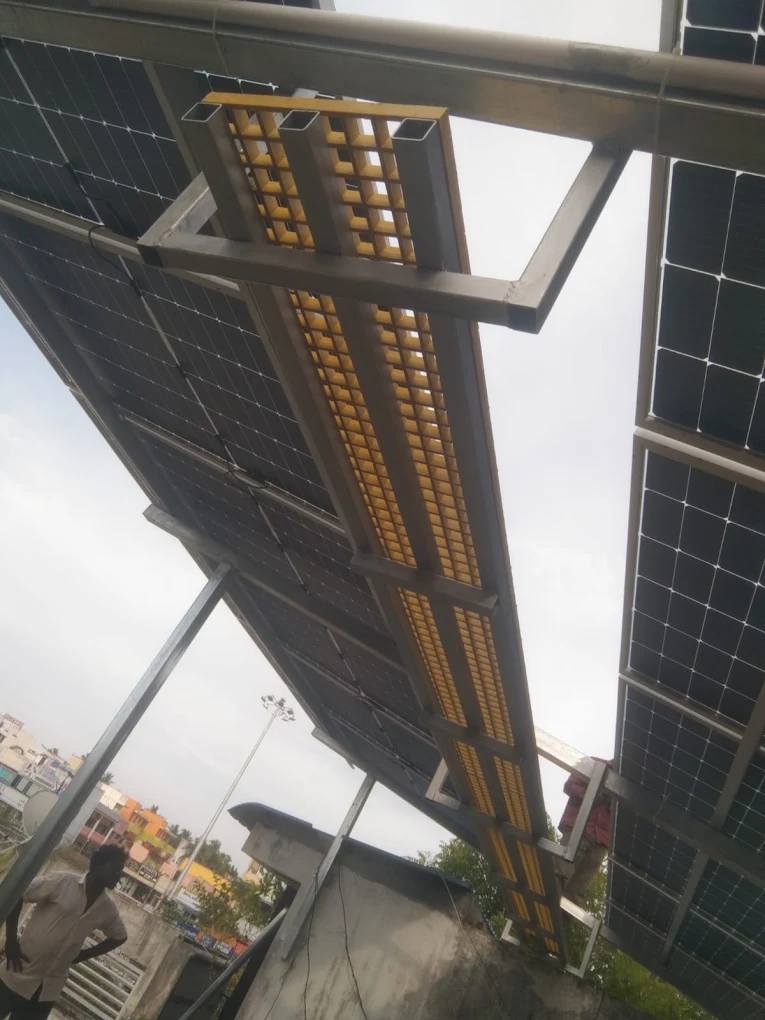
DCR modules are required for the rooftop subsidy. NDCR can look cheaper only if you give that subsidy up.
Read the article →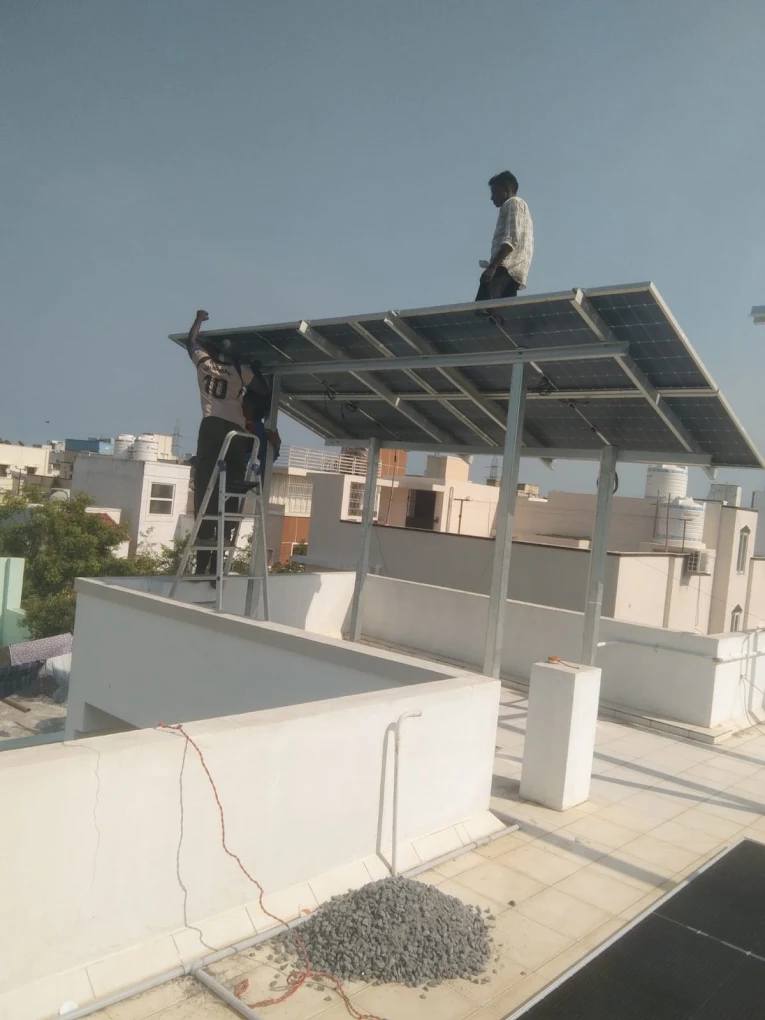
Terrace constraints on south Chennai houses, net metering from here, and why a Medavakkam Main Road team still matters after switch-on.
Read the article →Next step
We'll measure the usable area, check shading through the day, and tell you the realistic capacity.