
01
Site survey
Roof space, shade, orientation, and your electricity bill decide the plant size.
Residential rooftop solar
ZeroEB designs and installs rooftop solar plants for Chennai homes—from the first roof survey to TANGEDCO net metering and switch-on.
Why homeowners choose ZeroEB
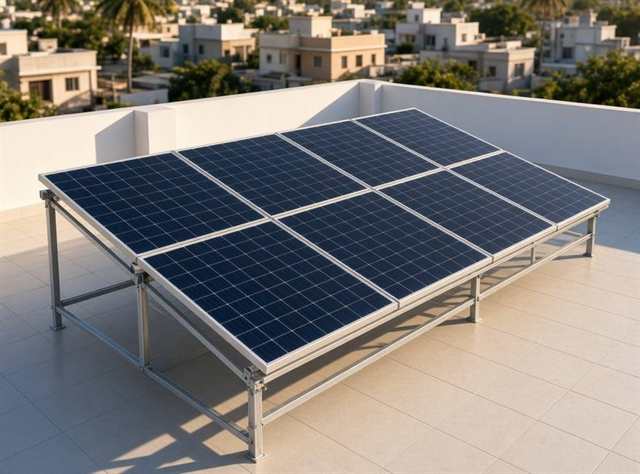
Searching for solar installation in Chennai should lead to a team that actually works on Chennai roofs. ZeroEB is based in Madipakkam and specialises in residential rooftop plants: the right size for your bill, neat structure work, and paperwork that does not stall after the panels go up.
Eligible homeowners can receive a government subsidy of up to ₹78,000. We help with the application and supporting documents. Subsidy amount and approval follow current scheme rules.
Chennai homesTANGEDCO supportSubsidy paperworkWhat is included
A complete rooftop plant, not labour-only work. If you already bought panels and need labour only, see our installation services page.
Roof space, shade, orientation, and your electricity bill decide the plant size.
A clear proposal for panels, inverter, and structure that fits your home.
Civil work, mounting, wiring, earthing, testing, and commissioning by our team.
Help with TANGEDCO net metering and subsidy paperwork for eligible homes.
Service area
Based in Madipakkam, we regularly install rooftop solar across south Chennai and nearby localities.
Before a figure is written
This page is for a complete rooftop plant: the modules, the inverter, the structure, the wiring, the tests, and the papers that follow. The figure is written after a free visit from the Madipakkam office. It is not a rate per panel, and it is not printed here. Two terraces with the same electricity bill can need different steel, a different cable run, and a different clear patch.
We start from a recent bill, not from a module count in a brochure. The units you already pay for, the months that spike, and any load you are about to add — an extra air conditioner, a pump, a floor that is still being built — set the range. The roof then confirms whether that range fits. If the clear patch is smaller than the bill suggests, the plant is reduced. We do not squeeze out the walkway to keep a round number.
Shade is measured on the roof, not guessed from the street. An overhead tank, a stair cover, a neighbour's wall, and the parapet all throw shade, and that shade moves hard after mid-afternoon. A row that is bright at 11:00 can be poor by 15:00. The layout leaves a path so the roof can still be used for the tank and for washing the modules later.
Access is part of the design. The stair, any locked terrace door, and how the modules will be carried up are noted before a date is fixed. Each hole in the slab is drilled, anchored, and sealed, so monsoon rain does not travel into the room below. The inverter needs a wall with air around it, not a closed loft. The cable route from the array to that wall, and from the wall to the distribution board, is walked while the roof is still empty.
Frames and cable glands are chosen for humid air. That matters on the coast, and it still matters inland, because a Chennai summer and the monsoon sit on the same steel. A shared apartment roof needs written permission from the association before any hole is drilled. Without that permission, the job does not start. A balcony is not a place we mount.
The proposal after the visit names the modules, the inverter, the structure, the cable, the earthing, the testing, and the commissioning. Civil work for the base is part of that job when the slab needs it. Eligible homes also get help with the net-meter application and with the subsidy file. The written scope is what you approve. A message that only shows a total, with the lines left out, is not that scope.
If the modules and the inverter are already yours, that is a different service. Labour for fitting equipment you already own starts at ₹3,000 per kW. The equipment, the structure steel, the cables, the connectors, and the papers sit outside that rate. The detail is on our installation services page. This page is the full plant, chosen for the bill after the visit.
Once the materials are on site, a typical home is finished across a few working days. The exact days depend on the size, the access, and how much civil work the slab needs. You do not have to leave the house. There is drilling while the base goes in, and a short planned interruption when the AC side is connected to the distribution board.
The utility's processing is not the same clock. The net meter is applied for, inspected, and changed on TANGEDCO's timetable. Generation for the home can be explained on the day of handover. Export, and the bill that follows, wait on that meter. We prepare the file and stay with the application. We do not promise a date the utility has not given.
Eligible homeowners can receive up to ₹78,000 when the modules are DCR and the file is approved. The amount and the approval follow current scheme rules. That assistance is not a discount printed on this page, and it is not subtracted from a price that has not been written yet. A cheaper module that fails the scheme can cost more once the assistance is given up. The visit is where we say whether the equipment we propose qualifies.
Compare the lines, not a single total from a message. Ask who supplies the modules and the inverter, whether each drilled hole is sealed, whether earthing is included, and who stays until the inverter has started and the tests are recorded. Those tests are voltage, polarity, insulation resistance, and earthing. Where the inverter supports it, the phone view is set up so generation is visible from the house. The roof is cleared of offcuts and packing before the crew leaves.
Also ask what happens if the terrace is smaller than the first sketch. A row that does not fit is redesigned. It is not forced against the parapet. Ask where the crew comes from. ZeroEB works from Madipakkam, at No.5, MSP Complex, F-3, Medavakkam Main Road, opposite Kumaran Theatre. The desk is open Monday to Saturday, 09:00 to 19:00. Call +91 9042517415 or +91 63854 67892, or write to  . A visit from that office is free.
Send a recent electricity bill, the area of the city, and whether the building is an independent house, a villa, or a shared roof. Photographs of the terrace, the tank, the parapet, and the wall where the inverter might go make the first conversation shorter. They do not replace the visit. Shade, the tank, and the path of the cable only become clear when someone stands on the roof. If you already hold a quotation from someone else, send that too. We read the scope, not only the last line.
Questions, answered
A full plant is written after a free site visit. The figure depends on the roof, the size the bill supports, and the components chosen. It is not a rate per panel, and it is not printed on this page. Eligible homeowners can receive a government subsidy of up to ₹78,000. Subsidy amount and approval follow current scheme rules.
Yes, for a complete rooftop plant. We help with the site survey, the system design, the installation, the TANGEDCO net-meter paperwork, and the subsidy application for eligible homes. The utility's inspection follows its own timetable. We prepare the file and stay with the application.
ZeroEB is based in Madipakkam and installs residential rooftop solar across Chennai, including Medavakkam, Nanganallur, Velachery, Pallikaranai, Keelkattalai, Adambakkam, and the other neighbourhoods listed on this page. The same crew travels from that office. A visit is free.
Once materials are on site, most homes are finished across a few working days. The exact days depend on system size, roof access, and the civil work the slab needs. The net-meter change is a separate step and follows TANGEDCO processing.
That is labour-only fitting, not the plant described here. Residential fitting starts at ₹3,000 per kW when the modules and the inverter are already yours. Cables, structure steel, and the papers sit outside that rate. See installation services for that scope.
A balcony is not a place we mount. A shared apartment roof needs written permission from the association before any hole is drilled. Without that permission, the job does not start.
Further reading
Read what to expect from solar installation in Chennai before you sign, our notes on solar power for a Chennai home, or the neighbourhood guide for solar installation in Madipakkam.
Book a free site visit from our Madipakkam team.
Request your free quote →