

01
Open edge
We note if the terrace looks onto the marsh, with no tall houses to break the wind.
Pallikaranai marsh edge and the radial road
Homes that face the marsh often have an open sky, and a wind that a row of tall houses would have broken. The frame and the clamps are chosen for that edge. On the radial road, a wide apartment terrace is often split by a pump room, so the plant is two arrays with a path to the pumps. The visit is from Madipakkam and is free.
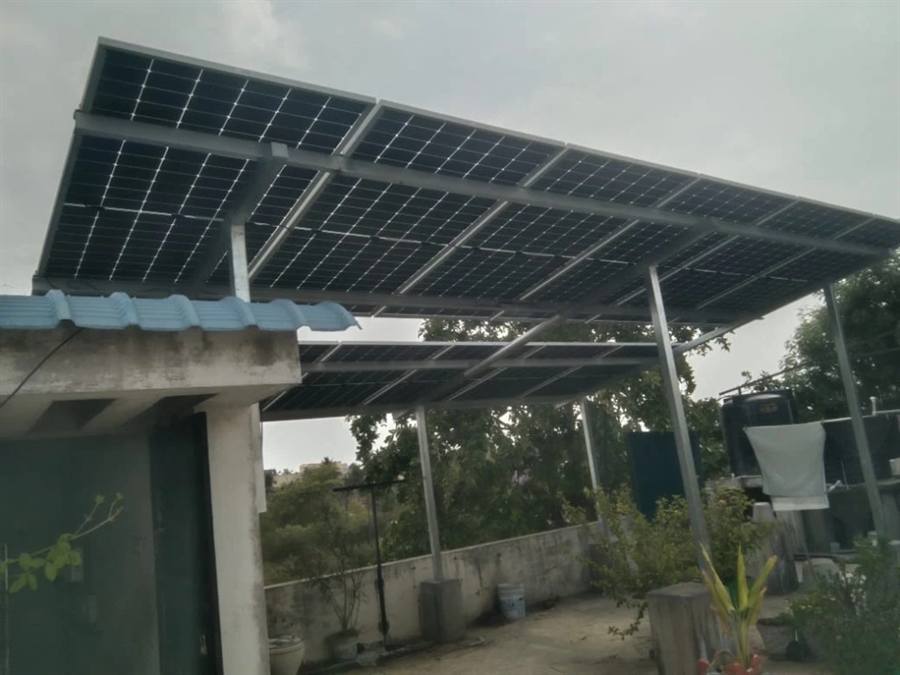
Sky is not the only measurement
Facing Pallikaranai marsh, shade from a neighbour tower is rarely the limit. The horizon is open, which helps the modules. The same openness lets monsoon gusts hit the frame directly. A wattage sticker does not say how the rails and clamps are held down on that edge. That line belongs on the quote.
Along the radial road the terrace is larger and already occupied in the centre. A pump room, with its tanks to one side, has to stay reachable. We draw two arrays and leave the path. Covering the room to gain a few modules blocks the people who service the water. City-wide module choice is on panels for a Chennai home. An office block taking half the roof is the Taramani case. Here the checks are marsh wind and a pump room.
Marsh wind on the framePath to the pumpsVisit from MadipakkamWritten on the visit
We note if the terrace looks onto the marsh, with no tall houses to break the wind.
Rails and clamps are specified for that exposure. The module brand is not a substitute for the fixing.
On a radial-road block the room stays uncovered. Two arrays leave a path for the pumps and the tanks beside them.
Central assistance needs cells and modules made in India. Eligible homes can receive up to ₹78,000. The amount follows the scheme on the day you apply.
Who can go ahead
An independent house facing the marsh can usually decide once the frame is specified. A flat on the radial road proceeds only after the association has allowed that household to use the terrace, in writing. A balcony over the wetland is not a mounting place.
How the posts and clamps are fixed is on solar panel installation. Modules you already hold are labour, quoted on installation services. The Pallikaranai figure is on solar panels and prices in Pallikaranai. How the crew sets the row is on solar panels and installation in Pallikaranai. The subsidy gap is on panel and price. NDCR against DCR is in that guide before an import is confirmed.
From this side of the marsh
Yes. The roof visit is free. A recent bill is enough to start. You can stop after the wind edge or the pump room is marked. No modules are ordered that day.
Yes. Open sky helps output. Gusts off the marsh are not broken by tall houses, so the frame and clamps are specified for that edge, not picked from a wattage sticker alone.
No. The plant is two arrays with a path to the pumps. Covering the room would block service.
Yes. Cells and modules must be made in India. Eligible homes can receive up to ₹78,000, subject to the scheme on the day you apply. NDCR is only if that assistance has already been given up.
A free visit from Madipakkam. We mark the open edge, the path to the pumps, and whether the plant should be DCR.
Request your free quote →