
NDCR vs DCR solar panels: which should you buy?
DCR modules are required for the rooftop subsidy. NDCR can look cheaper only if you give that subsidy up.
Read the article →This is one of the most common worries we hear on a first visit: if I install solar, do I have to surrender my electricity board connection, and what happens on a cloudy day or at night? The short answer is that a standard residential rooftop system is designed to work with the grid. You keep your connection, and the two simply share the load.
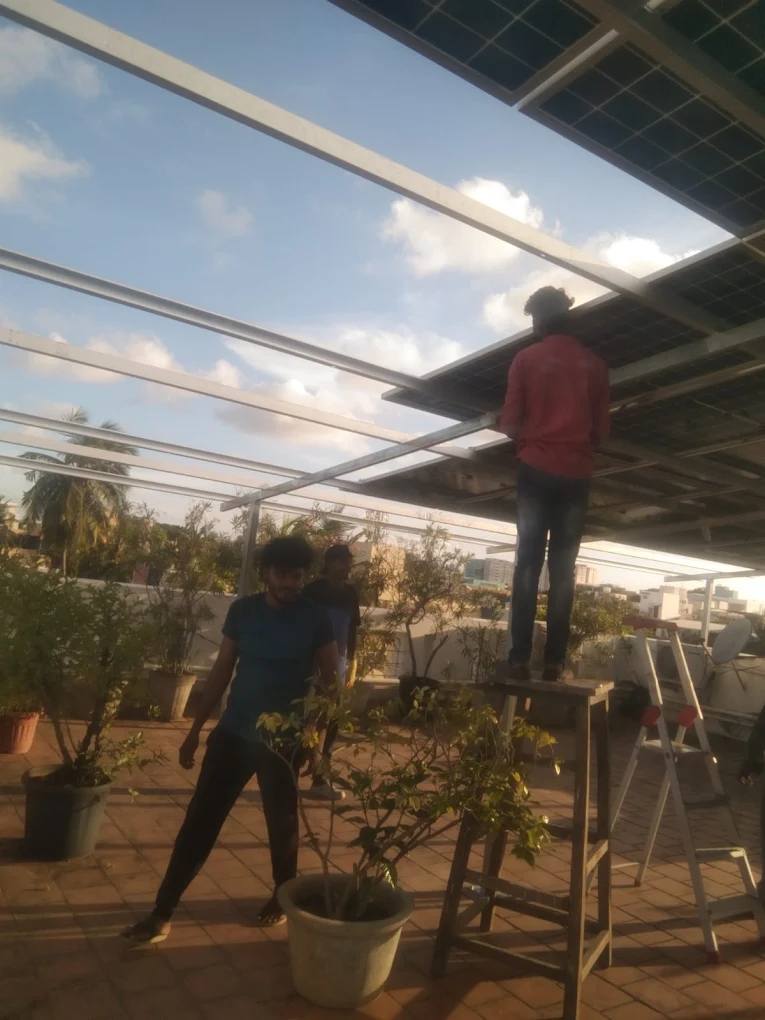
Through the day, your panels generate DC power, the inverter converts it to AC, and your home consumes that first. Nothing in the house behaves differently — the fan, the fridge, and the air conditioner run exactly as before.
The switching between these states is automatic and instantaneous. You will not notice it happening.
A grid-connected residential installation is normally paired with a net meter, which records both the electricity you draw from the grid and the surplus you export to it. Your billing is then based on the net position rather than on your gross consumption. This is exactly why the EB connection stays: without it there is nowhere for the surplus to go and nothing to fall back on after sunset.
Worth confirming for your own case: metering arrangements, applicable tariffs, and the treatment of exported units are set by the distribution utility and can change. We will walk you through the current position for your connection during the site visit.
Cutting the connection entirely means storing every unit you need for the evening and for stretches of bad weather, which requires a substantial battery bank. Batteries add significant cost, occupy space, and need replacement well before the panels do. For a home in a city with a reliable supply, the economics almost never justify it. Off-grid genuinely suits remote sites without a usable connection — not a house in Madipakkam.
If your concern is power cuts rather than billing, the right conversation is about a hybrid system with a modest battery for essential circuits, which is a different design from a plain grid-tied plant.
Your consumption from the grid falls, most noticeably for daytime usage. Fixed charges tied to your service connection continue to apply, so a well-sized system reduces your bill substantially rather than erasing every line on it. Sizing matters here: a system built around your actual annual consumption gives a better return than one sized to chase a zero figure, which is why we always ask for a year of bills before recommending a capacity.
If you would like to see what this looks like for your own consumption, book a free site inspection and we will work through your bills with you. Our short videos on system sizing cover the same ground in a couple of minutes.
Keep reading
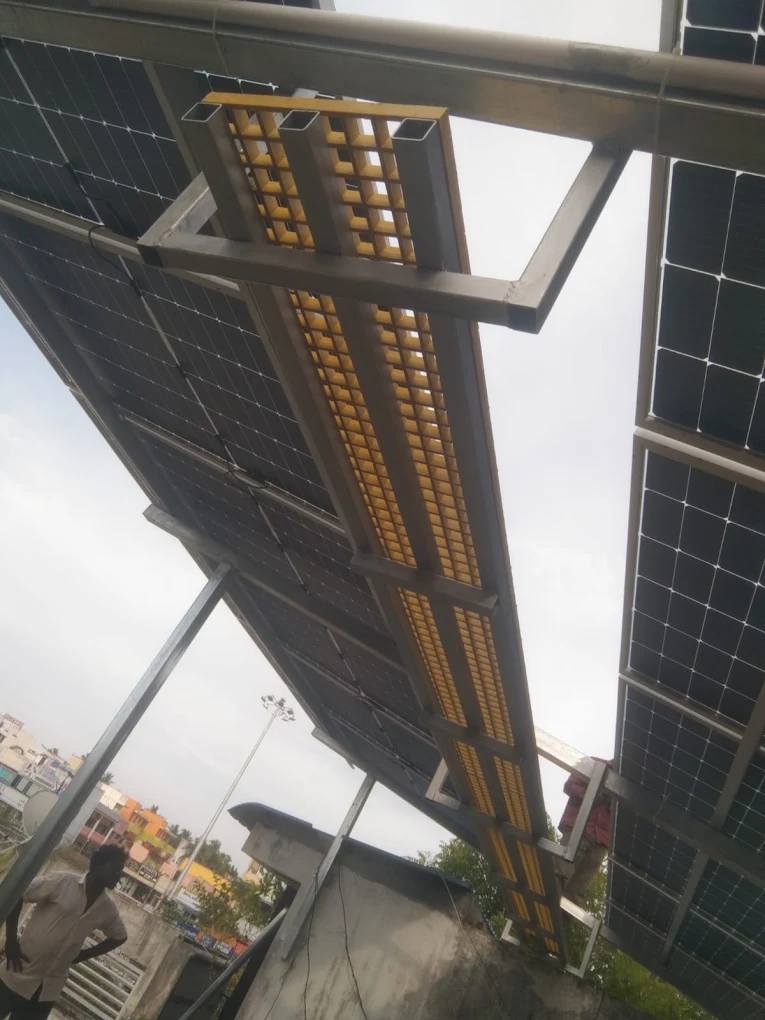
DCR modules are required for the rooftop subsidy. NDCR can look cheaper only if you give that subsidy up.
Read the article →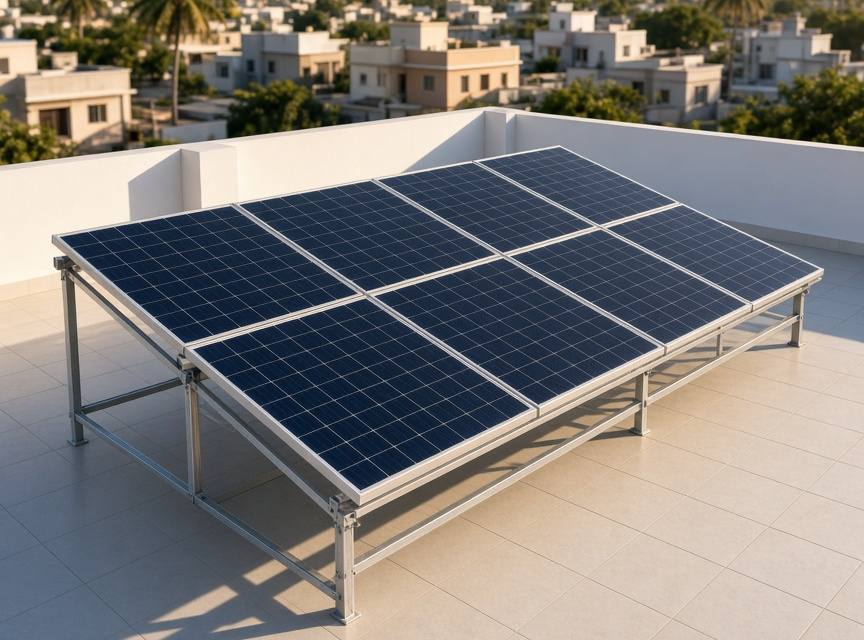
Heat, monsoon, TANGEDCO net metering, subsidy, and how to tell a real rooftop quote from a headline kilowatt price.
Read the article →
Terrace constraints on south Chennai houses, net metering from here, and why a Medavakkam Main Road team still matters after switch-on.
Read the article →Next step
Share your recent EB bills and we'll estimate the right system size and the reduction you can expect.